Image Getty
This article examines the current business models that employ energy inefficient technologies to both innovate and transform business and require high margins to extract revenues from both business and consumers. It then examines new models that seek to turn that model on its head and deploy technologies that low- and middle-income countries and businesses plus consumers can benefit from as well as high income markets. It covers: -
- LLM & data centre vendors, and sustainability
- Two evolving models
- High cost and extractive
- Lower cost and inclusive
- Not just tech vendors but consultancies as well
- The longer term?
LLM & data centre vendors, and sustainability
“Our assessment suggests that continuous improvements in AI and data center processing efficiency could yield an energy consumption level of approximately 1,000 TWh by 2030. However, if those anticipated improvements do not materialize in the coming years, the energy consumption associated with data centres could likely rise above 1,300 TWh, directly impacting electricity providers and challenging climate-neutrality ambitions.2”
Deloitte Nov 2024
In the short-term- next 2/3 years- the challenge is acute as there is a mismatch between electricity grids and new wind, solar and nuclear energy sources. Meanwhile Nvidia and other chip vendors introduce more and more powerful chips that consume more and more energy. Microsoft, I believe, will depreciate each new data centre over two years, and can afford to do that. Bur eventually the economics catch up.
The gap between energy consumption and energy infrastructure & grid connectivity is the big challenge growing as more and more data centres are planned and built. Longer-term cheaper energy will become more widespread but longer is the typical ‘how long is a thread of string’ phrase of hope rather than certainty.
Two evolving business models
Today, however, two different models are evolving which will significantly impact enterprises, consumers, and tech companies.
- The current extractive and non-sustainable model of the Western high-income countries
- headlong rush of LLM vendors, especially OpenAI, demanding ever more funding and circular financing from suppliers to spawn a massive data centre building program
- Almost a Ponzi scheme of financing when enterprises are already slowing deployment whilst they reconsider early deployments of GenAI at Salesforce.
- Chips that burn out within a year or even less making a mockery of depreciation rules applied in financial reports
- Likely superseding technologies to overcome the inherent limitations of LLMs
- The high costs tech customers must pay for financial services from international payments to insurance to contacting whether macro or micro
- The extractive business model charging businesses and consumes more- subsidised today but chickens will come home to roost one day
- The inclusive model already evident in a few areas
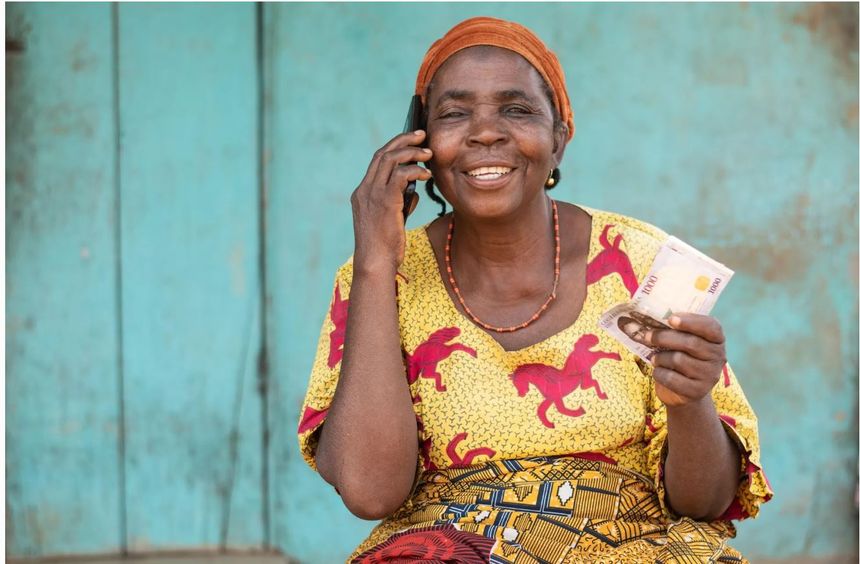
- Telcos in Africa who with scarce resources already provide payment/receipt services to low-income households and businesses which/who do not have access to banking i.e. Mobile Money
- Relief Financial with a patented platform; early use cases include: -
- Telcos in low and middle-income countries the ability to leverage the latent compute power of subscribers smartphones to validate proof of intent (POI) including for payments, micro contracts, notarisation
- And share the revenue stream from providing POI to subsidise smartphones, subscriptions- a strong loyalty reward for customers with a daily income of just $10-$25 a day
- Media companies to manage royalty payments with POI and identity validation
The current high-cost business model for high income customers
The high margin, high-cost business models that are widespread across the western world extract income and profits at the expense of humanity. Core systems from legacy to even Guidewire (insurance) based on ERP SaaS pricing costing $10s millions over a typical 5-year cycle. Data management and AI from, say, Palantir also costing $millions that defence and government seem willing to pay.
Lower cost inclusive models for low-& middle-income customers
But what about Latin America, Africa and many parts of Asia Pacific? Low- and middle-income countries cannot afford that. And how long will western businesses and consumers stand for the high profits of technology companies and service providers as they have to cope with high cost of inflation, taxes and cost of living?
The holistic efforts of hyperscalers and electricity providers to help increase the use of carbon-free sources to power data centres—including the ones being built exclusively for gen AI—may bear fruit in the longer term. But that is a possibility and not a certainty. Maybe too late to save LLM vendors trying to convince enterprise customers to pay the full cost in their subscription plans.
One of the early problems of blockchain was the energy consumption of mining whilst today ReLeaf Financial’s platform has shown the feasibility of using the low-cost and latent compute power of smartphones to mine and validate identities and proof of intent. Proof of work, still employed by energy intensive Bitcoin, has an alternative in proof of intent which ReLeaf deploys to validate payments and identities.
ReLeaf’s platform securely connects witnesses, also termed solvers, to find the best way to prove intent and only pays for actually proven cases of such intent. It is a less costly way of proving a party intended to make a payment, fully analysed and understood why and underpins the transaction.
It’s not just the tech vendors- it’s the consultancies
The complexity of enterprises means they are more likely to turn to the incumbent technology and consulting businesses that have long ruled the roost. They have a model where they sell long-term projects and ‘bodies’ at inflated prices often learning on the job at the client’s expense. I have experienced this the hard way when impressive teams presented copious slide decks combined with persuasive selling. I must admit to agreeing with a herd instinct that thought a global enterprise needed such expertise. You know- “Nobody got fired for hiring ***”.
Well, we certainly found out our mistake when the ‘C’ team arrived to manage the project. Three months later we sacked them and were an early adopter of a ‘boutique’ consulting and implementation partner that proved collaborative, put skin in the game and took pains to understand the challenges, opportunities and goals we had. Plus, our culture, resources and appetite for change and transformation.
The trend continues with boutique technology partners applying the same model at a far lower cost.
In fact, the CEO of ReLeaf Financial, Chris Surdak was a key member of the boutique technology partner that surpassed all our goals and KPI metrics in collaboration with our own IT, marketing, legal, and line of business teams.
The longer-term
It is so hard to see the wood for the trees- business leaders need to juggle macro trends with micro trends whilst their juggernaut enterprises, like giant oil tankers, are hard to turn course quickly but can change their destination.
AI is seen as the driver to faster innovation and artificial general intelligence (AGI) and artificial super intelligence (ASI) eventually surpassing human intelligence and capabilities. That is probably decades away, and Quantum computing will herald a new era but is still a probabilistic tech rather than a deterministic outcome technology that humans are so good at.
Current LLM technology is a hammer to crush a nut approach that is useful (see further reading) even to critics of the hallucinating and drifting LLMs. Superseding technologies will tackle that, and we wait to select the right tools. In the meantime, innovators such as ReLeaf are deploying alternative and sustainable solutions. Google itself has announced its own Proof of Intent platform aimed at agentic AI deployments but very much in the high margin and energy consuming model. It has the pockets and technologies plus paying customers to succeed of course but that still leaves low- and middle-income countries and customers without a solution.
African telcos such as Vodacom, Safaricom and MTM have already countered this providing mobile money solutions to customers without access to bank accounts. They have leapfrogged banks to support customers who often have incomes of only $15-$25 a day. There are an additional 2 billion such customers which may ignore banks and embrace telcos. ReLeaf is a platform that will enable telcos to achieve that whether integrated into existing mobile money backends or delivering complete payment systems for those entering this market in LATAM, Africa or parts of Asia-Pacific.
It would then be too late for the high margin and costly western models to capture that market and they will be vulnerable to the new business model technologies and consulting/implementation partners acting like a Trojan Horse and penetrating mature markets.
I love this quotation from Jean Pierre Mugenaga:
“Mike Daly what excites me most is not the patent or the platform. It is the possibility. In regions where small businesses lose up to 3 percent on every digital payment and families pay 6 to 20 percent just to send money home, the burden is carried by those with the least margin for loss. A technology that can bring those costs close to zero doesn’t just improve a system. It restores dignity. It returns billions to communities that have been overcharged for decades. This is the kind of progress that actually matters.”
Please continue this discussion if you wish here.
Further Reading
Telcos Are Becoming Banks For The Next 2 Billion Customers Forbes Mag
Leveraging Blockchain in a New Era of Antitrust- Stanford
An AI revolution in drugmaking is under way The Economist
today's new users get immediate access to sophisticated applications and stable networks. Second, these markets altogether skip the traditional banking evolution. The World Bank's Global Findex Database shows 1.4 billion adults remain unbanked, concentrated in regions where mobile money already dominates. Rural Colombia never built bank branches. Nigerian villages never installed ATMs. So when mobile payments arrived, people switched from cash directly to digital money without the friction of introducing banks or changing established habits.
 unknownx500